Posts

Language a Learning the Easy Way (Fun Way of Learning Using Transliteration)-II

Image
When we communicate in any other language other than our mother tongue we tend to compose in our mother tongue the message we intend to communicate. Then we "substitute" the words of the message with the words of the language we want to communicate in. This results in a confusing message that can have funny or rather embarrassing outcomes. True, this is what we term as "Transliteration". The root cause of such faux pas and confusion is because the Parts of speech are common in all the human languages, but different languages use different grammatical rules in composing sentences; needless to say, it becomes a nightmare for language learners who often give up on learning a language fearing the reaction to the mistakes they may make in course of learning. A fact, both the educators, the facilitators, and the learners ignore is transliteration is an integral part of the language learning process. In fact, in applied learning process viz. functional learning ...
Learning a Language the Easy Way (Functional Method of Language Learning Using Colour Cards) - I

Image
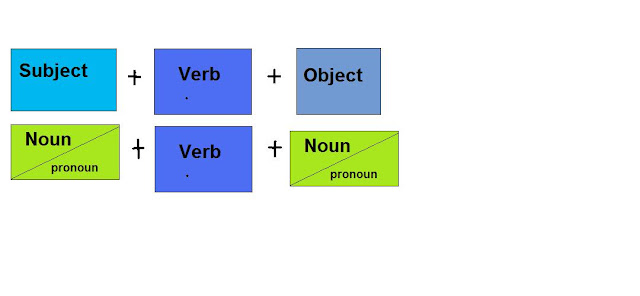
Applied and Activity Based Learning We use a language not only to understand and express our thoughts, and emotions but also as a formal and informal means of communication in our everyday life. In the Functional Method of language learning, we use the learner's knowledge of fundamental concepts of a sentence and sentence structure in learning how to express oneself in a new language. We can use colour cards in the functional method of learning a language viz. English Language: SINGULAR ~ ONE PLURAL ~ MANY First Person Singular "I" First Person Plural "We" We can learn the language in a very simple way by using Color Cards that will represent the important parts of a sentence and help us in understanding the relevance of each part in forming the sentence: W e will make three-colour cards for  " Subject ", " Verb "  and  " Object " .  Subject  to represent the person or object that does the action or activity denoted by the ...

THE CURIOUS CASE OF BIRD FEEDER

Image
"Let the Children Learn How to Think and Use their Learning in Social and Environmental Harmony; Instead of  Learning What to Think?" Srishti made a bird feeder. Deepu and Deenu saw her trying to tie it to Amla tree's branch and rushed to help her. "Didi, what is this? Let us help you...we will climb the tree and tie it to the branch." "Thank you, Deenu and Deepu." Shrishti eagerly accepted their help. "Be careful. Please tie it to a slender branch and keep it out of cats' reach." "Don't worry Didi. We will take care of that too." replied the two friends while climbing up the tree to tie the bird feeder to its branch. Once the job was done to the trio's satisfaction, Deenu and Deepu once again asked Srishti about the bird feeder and how she had made it. "Deepu, it is a bird feeder I have made out of waste plastic items like an empty plastic bottle of 7Up, used plastic straw, and a single-use plastic ...

December 16, 2012

Image
DECEMBER 16, 2017 WAS THE FIFTH ANNIVERSARY OF NIRBHAYA INCIDENCE IN DELHI. ONE OF THE RAPISTS HAD SAID, 'GOOD AND DECENT WOMEN DON'T VENTURE OUT OF THEIR HOUSE AFTER 9 PM...' THIS PROVES RAPISTS ARE VICTIMS OF: 1. Lack of happy healthy childhood with proper parenting, schooling along with the progressive and pragmatic social environment. 2. The above-mentioned factors have a negative influence in the form of gender bias, prejudice, false self-perception, an unrealistic expectation set by parents, self, a community in the form of intra and inter-community influence. This is eventually extrapolated in personal and professional identity. 3. The influence listed as the second point makes the person feel helpless and allows his fear, apprehension and self doubt prey on him making him or her aggressive, vindictive with a domineering, complaining and negative attitude towards life. 4. Such a person can be easily manipulated into repressive and anti-social activities a...

MULTI(THREE)-PRONGED APPROACH to Learning and Organisation Development

Image

FILTRATION: A Novel Strategy to Coach, Mentor and Educate

Image
Filtration (Reverse Osmosis) A Novel Way to Coach, Mentor and Educate We often speak of coaching or mentoring a person to hone his skills, knowledge and behaviour that can enable him to excel in his life. The most common way of coaching, mentoring or educating a person through discussions and often through discussion on how to improve his ability to achieve his life’s objectives. This form of coaching is similar to the process of osmosis in which, the knowledge and experience of the coach, mentor or educator assesses or evaluates the ability of the mentee or the learner and directly guides him through discussion on how he can develop and enhance his capability to excel in managing and executing his responsibilities. This is followed by regular appraisals and assessment of his performance to further guide him in his course of achieving his objectives. This is a diagnostic way of mentoring or educating a mentee or a learner. The filtration method of mentoring i...